George Herbert Mead
South Hadley, MA
1863–1931
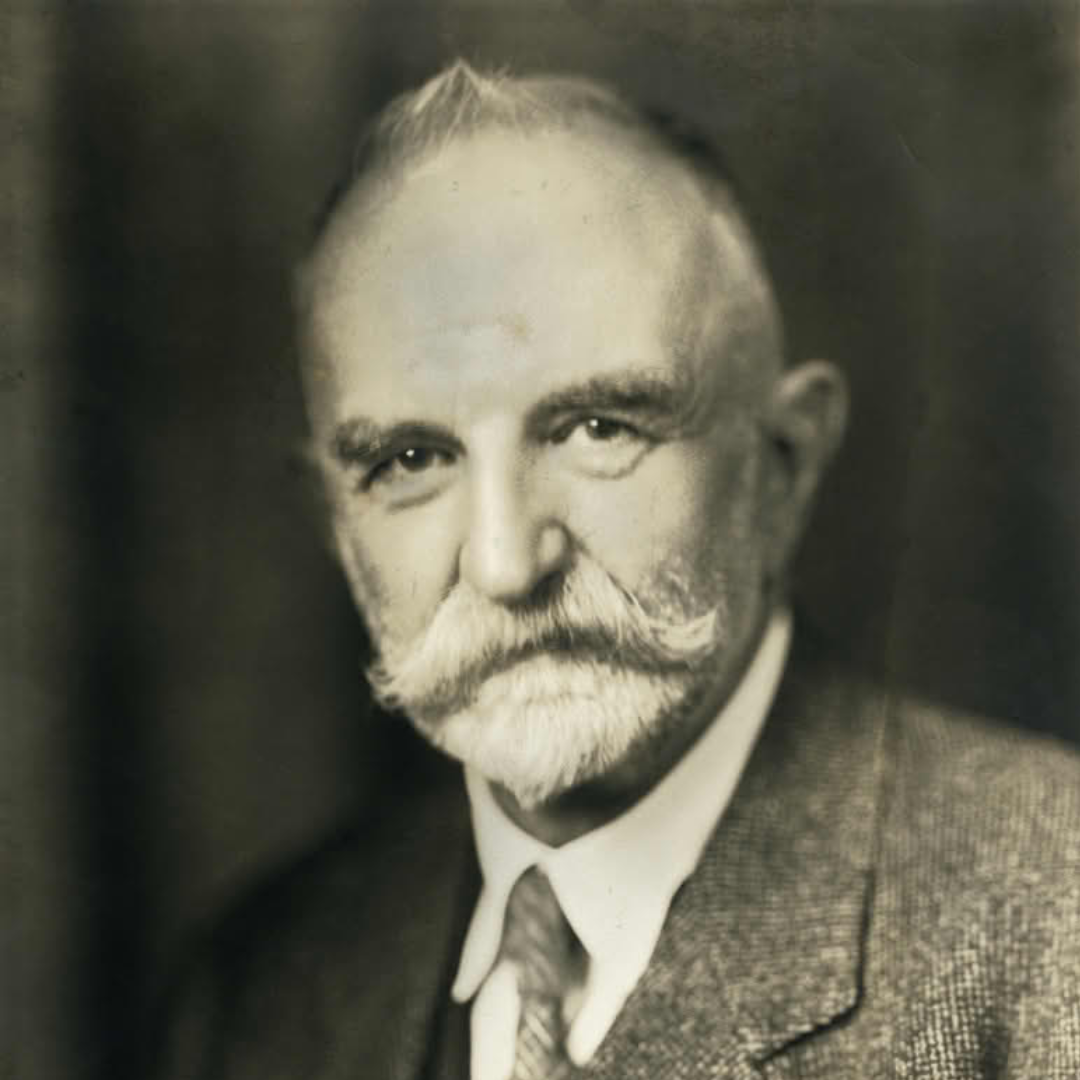
George Herbert Mead (1863–1931) was an American philosopher, social psychologist, and pragmatist whose work explored the relationship between the individual, society, and the development of the self. Building on the pragmatist tradition of Charles Sanders Peirce, William James, and John Dewey, Mead argued that human thought and identity emerge through social interaction and communication. His theories of the self, symbolic communication, and social behavior helped shape modern social psychology and sociology, making him one of the most influential figures in the development of American pragmatism.
Key Works by George Herbert Mead
The Mechanism of Social Consciousness
Explores how human consciousness develops through social interaction and communication.
George Herbert Mead and Pragmatism
George Herbert Mead was one of the leading figures in applying American pragmatism to the study of the self, communication, and social life. Working closely with John Dewey at the University of Chicago, Mead developed a pragmatist account of human behavior that emphasized the role of social interaction in shaping thought and identity. His work helped extend pragmatism into psychology and sociology, influencing the development of the social sciences.
In his lectures and writings—most notably Mind, Self, and Society—Mead argued that the self emerges through communication and participation in social life. Through language and interaction with others, individuals develop a sense of identity and learn to navigate the world. This reflected the pragmatist view that meaning arises through experience rather than abstract reflection.
Mead’s theory of symbolic interaction emphasized that people act based on shared meanings that are created and revised through social processes. His ideas complemented the work of William James, John Dewey, and Jane Addams, helping establish a distinctly pragmatist understanding of human nature, communication, and community. Today, his work remains foundational in sociology, social psychology, and theories of identity.
Key Ideas of George Herbert Mead
The Social Self
Mead argued that the self develops through interaction with other people. Personal identity is not innate but emerges through communication, relationships, and participation in society.
Symbolic Interaction
Human beings use language and symbols to create shared meanings. These meanings shape how individuals understand themselves, others, and the social world.
Mind as a Social Process
Mead believed that thought arises from social interaction rather than existing independently within the individual. The mind develops through communication and the ability to take the perspective of others.
The “I” and the “Me”
Mead distinguished between the spontaneous, creative aspect of the self (“I”) and the socially shaped aspect (“Me”). Human behavior emerges through the ongoing interaction between these two dimensions.
Influence on American Pragmatism
George Herbert Mead played a pivotal role in extending American pragmatism into the study of society, communication, and human development. While Charles Sanders Peirce established the philosophical foundations of pragmatism and William James popularized its emphasis on experience and action, Mead demonstrated how pragmatist ideas could be applied to understanding the formation of the self and the dynamics of social life.
Mead’s work emphasized that meaning, thought, and identity emerge through social interaction. Building on themes developed by John Dewey, he argued that human beings develop their sense of self through communication, cooperation, and participation in communities. This social understanding of mind and behavior helped broaden pragmatism beyond philosophy and into the emerging fields of sociology and social psychology.
His theories became the foundation of symbolic interactionism, one of the most influential traditions in modern sociology. By showing how individuals create and interpret meaning through shared symbols and language, Mead provided a framework for understanding social behavior that remains influential today. His work also complemented the democratic and community-centered concerns of thinkers such as Jane Addams, who similarly emphasized the importance of participation and social engagement.
Today, Mead is recognized as one of the most important figures in the pragmatist tradition and a foundational thinker in the social sciences. His ideas continue to shape discussions of identity, communication, education, and human behavior, demonstrating how pragmatism can illuminate not only philosophical questions but also the social processes through which individuals and communities create meaning.