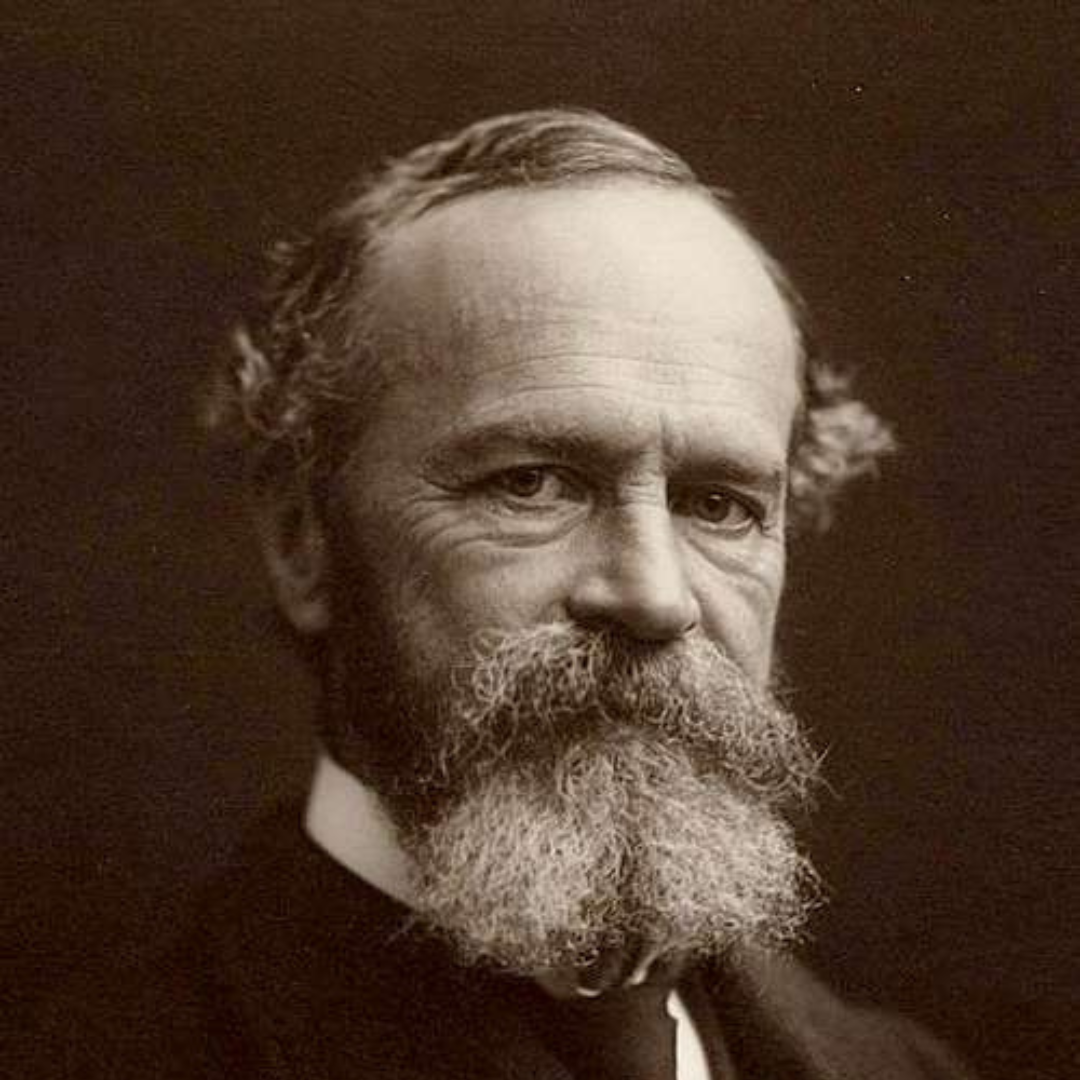
William James
New York City, U.S.
1842-1910
William James (1842–1910) was an American philosopher and psychologist and one of the most influential figures in the development of pragmatism. Through works such as Pragmatism and The Will to Believe, he helped popularize pragmatist philosophy, emphasizing the role of experience, belief, and practical consequences in shaping truth. James also played a foundational role in modern psychology, bridging philosophical inquiry with the study of human thought and behavior.
Key Works by William James
The Will to Believe
Introduces the pragmatic maxim, arguing that the meaning of ideas lies in their practical effects and observable consequences.
What Pragmatism Means
Challenges several foundational assumptions in modern philosophy, particularly those associated with René Descartes.
Pragmatism
Clarifies his original formulation of pragmatism, distinguishing it from popular interpretations that had diverged from his intent.
Pragmatism’s Conception of Truth
Explores how individuals form and maintain beliefs, and why some methods of belief formation are more reliable than others.
Great Men and Their Environment
Introduces a foundational framework for understanding how thought and meaning are structured.
The Present Dilemma in Philosophy
Introduces the central conflict that pragmatism seeks to resolve: the tension between two opposing philosophical temperaments
William James and Pragmatism
William James was one of the central figures in the development and popularization of American pragmatism, transforming what began as a technical philosophical method into a widely influential intellectual movement. Trained in both medicine and psychology, James approached philosophy through the lens of human experience, focusing on how beliefs function in practice rather than how they are defined in abstraction.
In his lectures and essays—most notably Pragmatism (1907) and The Will to Believe (1896)—James argued that the truth of an idea is not fixed or absolute, but is instead shaped by its practical consequences and its ability to guide action. For James, beliefs are not merely passive reflections of reality; they are active tools that help individuals navigate uncertainty, make decisions, and engage with the world. This emphasis on experience, usefulness, and lived outcomes made pragmatism more accessible and influential beyond academic philosophy.
James also extended pragmatist thinking into areas such as religion, ethics, and psychology. In works like The Varieties of Religious Experience, he examined how belief systems operate in real human lives, arguing that their value lies in their effects on individuals and communities. His concept of the “stream of consciousness” further reshaped the study of the mind, reinforcing his broader commitment to understanding thought as dynamic, continuous, and rooted in experience.
Although Charles Sanders Peirce originally formulated the principles of pragmatism, it was James who brought them into public discourse and gave the movement its lasting cultural and intellectual impact. His work influenced later thinkers such as John Dewey, who expanded pragmatism into education and social theory, and continues to shape discussions in philosophy, psychology, and religious studies today.
Key Ideas of William James
Pragmatism as a Theory of Truth
James argued that the truth of an idea depends on its practical consequences and how well it works in experience. Truth is not fixed or absolute, but develops over time as beliefs are tested in real situations.
The Will to Believe
In cases where evidence is inconclusive but a decision must be made, James maintained that individuals are justified in choosing beliefs that are meaningful or beneficial. Belief is not purely intellectual. It actively shapes action and experience.
Radical Empiricism
James proposed that experience includes both individual sensations and the relationships between them. This view rejects a strict divide between mind and world and emphasizes that reality is understood through lived experience.
The Stream of Consciousness
James described human thought as a continuous and flowing process rather than a series of separate ideas. This concept became foundational in psychology and highlights the dynamic nature of the mind.
Pluralism
James rejected the idea of a single unified system of truth. He argued that reality is diverse and open-ended, and that different perspectives can reveal different aspects of truth.
The Practical Value of Belief
For James, beliefs function as tools that help individuals navigate the world. Their value lies in their ability to guide action, solve problems, and contribute to meaningful human experience.
Influence on American Pragmatism
William James played a decisive role in transforming pragmatism from a technical philosophical method into a widely recognized intellectual movement. While Charles Sanders Peirce first formulated the core principles of pragmatism, it was James who brought those ideas into public discourse through lectures, essays, and accessible writing. His ability to connect philosophy to everyday experience made pragmatism influential far beyond academic circles.
James’s emphasis on belief, experience, and practical consequences helped shape how later thinkers understood the purpose of philosophy. He argued that ideas should be judged by how they function in real life, an approach that resonated strongly with John Dewey, who extended pragmatism into education, democracy, and social reform. Dewey’s work built on James’s focus on experience and inquiry, applying these principles to institutions and collective life.
Beyond Dewey, James’s influence can also be seen in the development of American psychology and the study of religion. His exploration of consciousness, habit, and religious experience opened new areas of inquiry and helped establish psychology as a distinct scientific discipline. Thinkers such as George Herbert Mead drew on these ideas in their work on the self and social interaction, further expanding the reach of pragmatist thought.
James also helped shape the public understanding of pragmatism itself. By framing it as a practical and flexible approach to truth, he made the philosophy accessible to a broader audience, ensuring its lasting impact on American intellectual life. Today, his work continues to influence discussions in philosophy, psychology, education, and religious studies.